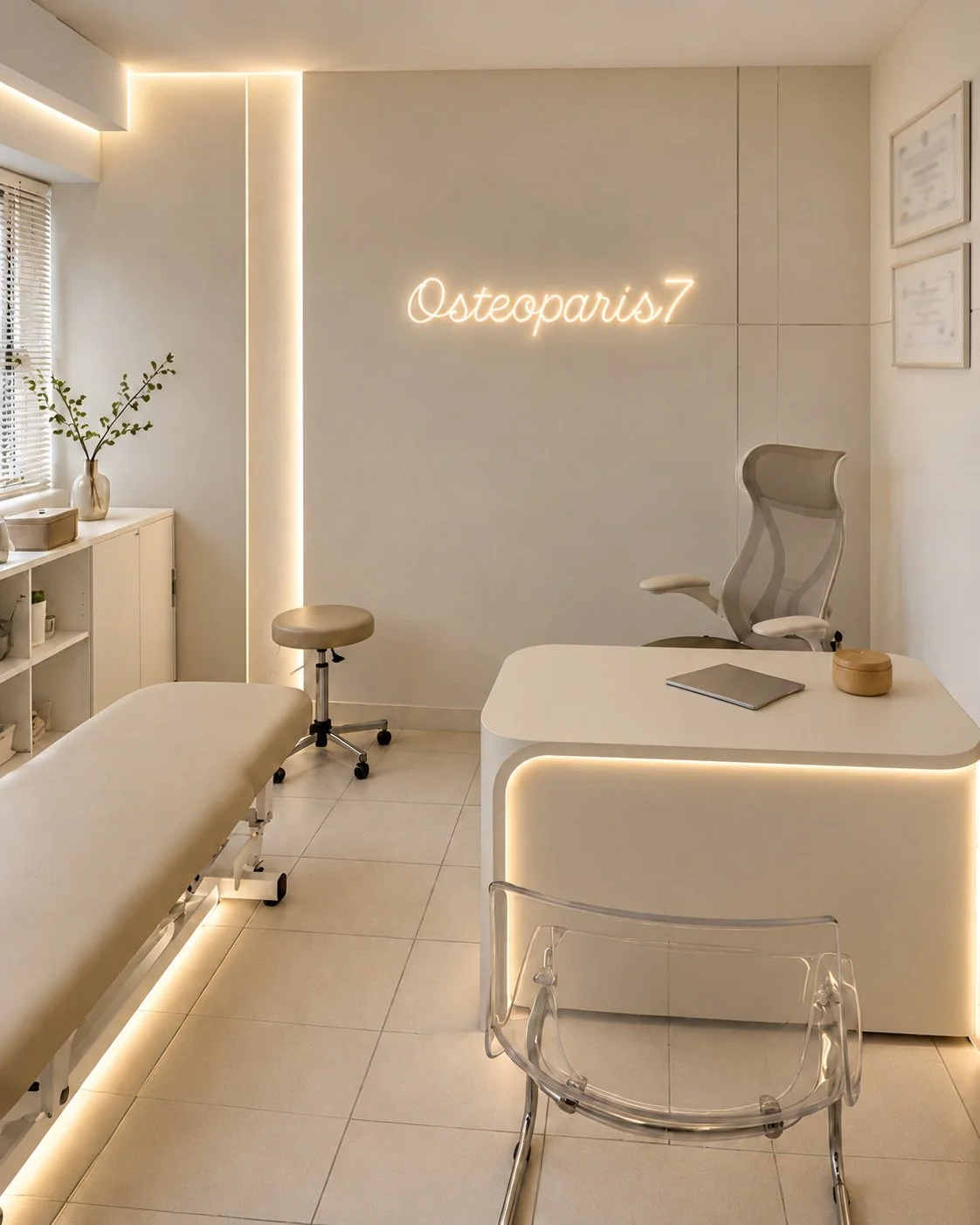
Shoulder pain: preparing an osteopathy consultation in Paris
Reaching overhead, putting on a jacket, working or returning to training can become difficult when your shoulder hurts. Michael Abergel offers consultations in English at Osteoparis7, 80 rue Saint-Dominique, Paris 7. The appointment starts with your symptoms and daily activities to assess whether an osteopathic approach is appropriate.
If the pain is sudden, severe or follows an accident, check when medical advice is needed before booking.
What should you explain during the appointment?
Describe when the pain began, whether it followed a fall or activity, and which movements have become difficult. Is it reaching a shelf, carrying a bag or lying on your side? Mention neck symptoms, tingling, loss of strength and any care you have already received.
The discussion and examination help establish what can be considered during the appointment and whether medical advice is needed first. Proposed techniques are explained, with time for questions before you agree to them. Read what to expect from a consultation.
How can osteopathy fit into care for shoulder pain?
Osteopathy offers a hands-on approach adapted to the movements you find difficult. Depending on the assessment, an appointment may include joint mobilisation and work on the muscles and soft tissues around the shoulder. Michael Abergel also considers movement in your neck and upper back, your medical history and the demands of your daily activities when choosing the proposed techniques.
The aim is to improve comfort and mobility in specific activities: raising your arm, getting dressed, carrying a bag or taking part in your sport. Techniques are explained and adapted to your tolerance. Your response during the appointment and changes in your symptoms inform the discussion about further care.
Osteopathy can be considered alongside medical care and rehabilitation when these are needed. For rotator cuff tendinopathy, the French Haute Autorité de Santé describes progressive rehabilitation combining active techniques and, within that programme, manual therapy. These recommendations concern physiotherapy; the content of your osteopathy appointment is chosen according to your situation. HAS guidance, physiotherapy section, in French.
Bring any instructions from your doctor or physiotherapist, particularly after surgery or injury. Explain your current care plan and any restrictions. This provides a starting point for discussing what is appropriate and which questions should go back to your treating team.
Do you need an X-ray, ultrasound or MRI?
Imaging is chosen according to the clinical situation. The French health insurance service explains the role of X-rays and, after reassessment where appropriate, other investigations. Bring reports you already have. A doctor determines whether further tests are needed; arranging your own MRI is not a prerequisite for an appointment. Assurance Maladie: assessment of persistent shoulder pain, in French.
Professional athletes and visitors to Paris
If your enquiry relates to tennis, swimming, weight training or another sport, describe the movements that trouble you and your upcoming schedule. Return to sport after an injury should be discussed with the professionals managing your care. See the information for professional athletes and their agents for consultation arrangements.
If you are arranging a visit for someone else, include preferred dates, the proposed location and your contact details. Home visits near the Paris practice depend on availability. International travel requests are discussed directly with Michael.
What should you bring?
Bring relevant reports, details of previous injuries or operations and your current treatments. Write down two or three activities you want to discuss, such as dressing, carrying luggage or a movement at work. You do not need to know the name of the condition to explain what has changed.
Consultations are available in French and English. The consultation page gives practical information. You can also email Michael before travelling to Paris if you need to clarify arrangements.
When medical advice is needed
Shoulder pain with chest pain or shortness of breath may require emergency care. In France, call 15 or 112. Healthdirect: emergency symptoms · Emergency numbers in France.
Seek prompt medical advice after an accident, for sudden very severe pain, a change in shape, marked swelling, loss of feeling or inability to move your arm, or if you feel feverish or unwell. Pain that worsens or does not start improving after two weeks also needs medical review. These examples are not a complete checklist. NHS: shoulder pain.
Sources consulted: HAS, Assurance Maladie, NHS, Healthdirect and Service Public. This is general information; individual assessment determines appropriate care.